

The digital scene is buzzing with a new game in town: Answer Engine Optimization (AEO).
For ages, SEO professionals have been fine-tuning their websites to peak Google’s ranks, all in the hopes of snagging that sweet first-page spot to rake in organic traffic.
To achieve this, SEO engineers use a mix of different tricks, like optimizing keywords, building links, and making sure the site runs smoothly, to help a website show up and rank well for all sorts of relevant searches.
This whole idea was based on the belief that when someone starts looking for something online, they kick things off with a keyword search and wrap it up by clicking on a website to dig deeper.
Answer Engine Optimization (AEO) is giving a fresh twist to that view!
AEO proves that folks are actually less inclined to scroll through a bunch of boring blue links; they’d much rather get direct answers to direct questions!
AEO is all about tweaking your content so that search engines can deliver quick and spot-on answers directly to users, no clicks needed.
It makes your content the go-to answer for a particular question, whether it pops up in a featured snippet, a voice assistant reply, or an AI chat.
While SEO is focused on boosting a website’s overall position, AEO’s main aim is to get your content chosen and shown as the quick, trusted answer people are looking for.
But this doesn’t mean traditional SEO is dead, not by a long shot!
What’s happening is that the way we think about “visibility” is changing.
Take ChatGPT, for example—they’re a big part of this whole “answer engine” wave.
For one, ChatGPT’s user base has totally blown up, with reports showing hundreds of millions of people using it every week!
How ChatGPT Is Boosting the New Traffic Funnel
Data from different sources like Semrush and Ahrefs show that more and more referral traffic is coming from AI platforms to websites.
It may not be as huge as the organic traffic from Google, but the growth is pretty obvious and definitely deserves some serious attention.
Here are some interesting facts about the platform, according to Semrush figures in June 2025:
- ChatGPT.com is visited approximately 5.24 billion times each month
- ChatGPT.com has a bounce rate of 40.01%.
- Each visitor views an average of 4.5 pages per visit
- Each user spends an average of 12 minutes and 9 seconds on the site.
In addition to that, it was estimated that ChatGPT received 37.5 million searches per day in 2024, while Google received 14 billion.
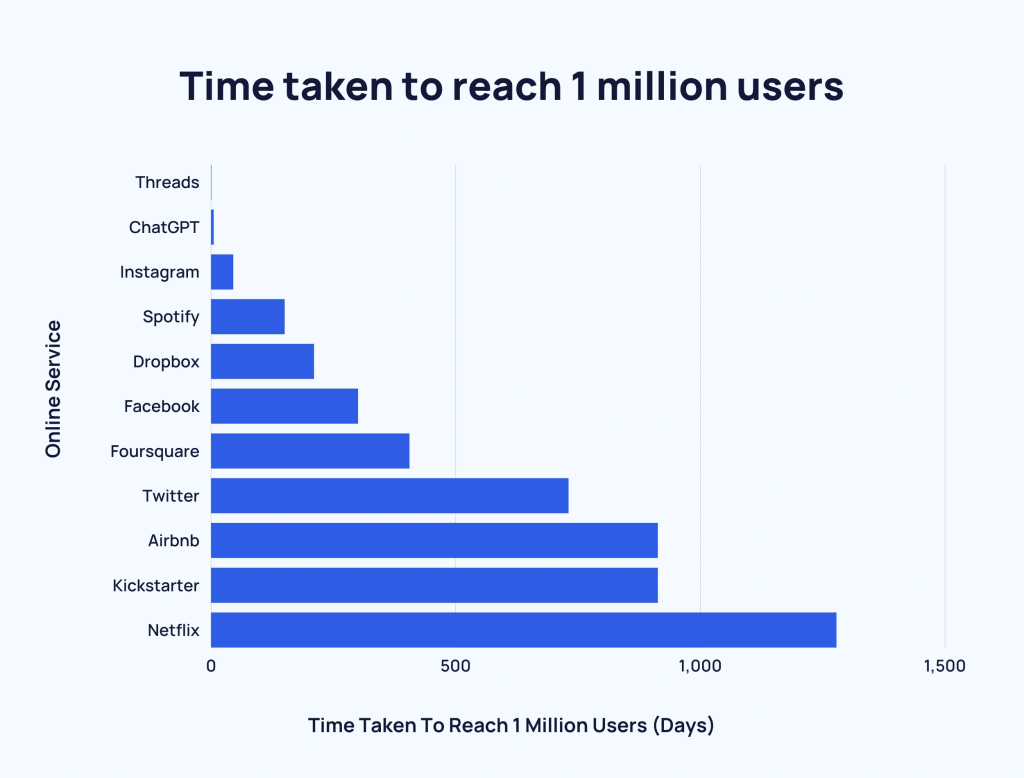
According to OpenAI, ChatGPT acquired 1 million users just 5 days after launching in November 2022.
This made it the fastest-growing application in history until Threads took that crown in July 2023.
By comparison, it took Instagram approximately 2.5 months to reach 1 million downloads. And Netflix had to wait around 3.5 years to reach 1 million users.
Incredibly, it’s estimated that ChatGPT then went on to hit 100 million monthly active users in January 2023, two months after launch.
To put that into perspective, TikTok took 9 months to reach 100 million users. And Instagram took 2.5 years. These figures are according to Statista, Reuters.
And it seems like this wave is not gonna slow down anytime soon.
According to figures from SEMrush, traffic from AI search engines is projected to overtake traffic from organic search in 2028.
So even though Google still dominates the search game, these new AI-first platforms are going to take over the search game in a few years.

Why Is Answer Engine Optimization So Appealing To Users ?
A big reason we’re seeing more need for AEO is that zero-click searches are blowing up.
According to data from SparkTaro and Semrush, by 2024, almost 60% of Google searches were concluded without anyone actually clicking on any links.
The rise of zero-click searches isn’t just some random stat—it’s like a “silent revolution,” showing how people are more concerned about instant gratification and getting what they want right away.
As you can imagine, this shift in user behaviour is really alarming for businesses.
If a brand’s online presence and success are tied exclusively to organic click-through rates (CTR), it could be in big trouble and end up fading into the oblivion.
The good news is, a brand can still boost its visibility and brand awareness through those zero-click interactions, even if nobody actually visits the site.
I’ve prepared a framework that showing a fresh way to measure success for AEO campaigns!
Table 1: AEO Performance Metrics Framework
| Metric Category | AEO-Specific KPIs | Strategic Value |
|---|---|---|
| Visibility | Featured snippet capture rates , voice search response rates, AI-generated summary inclusion, AI visibility leaderboard ranking, Brand Presence Explorer results | Measures brand’s presence in prime SERP real estate and AI-generated answers, which builds authority and trust. |
| Authority | Citation frequency in AI responses, sentiment analysis of brand mentions, competitive displacement analysis | Gauges how often and in what context the brand is cited as an authoritative source, which indicates its influence in a given niche. |
| Impact | Conversions from high-intent queries, local traffic growth and inquiries | Links visibility to business outcomes, demonstrating the value of AEO beyond traditional traffic metrics. |
Keeping an eye on both the usual SEO metrics and these new AEO metrics lets you make sure your approach covers all bases for search visibility and shows you’re actually getting a good bang for your buck.
Traditional SEO vs Answer Engine Optimisation
The relationship between AEO and SEO is often misunderstood.
But here’s the deal: AEO isn’t trying to compete with traditional SEO; it’s more like a add-on that works on top of a strong SEO foundation.
Ultimately, both strategies aim to boost online visibility and meet user needs. The only difference is that they go about it in different ways and have their own specific approaches.
The table below shows the main differences and similarities between the two approaches:
Table 2: The main differences and similarities between SEO and AEO
| Aspect | Traditional SEO | Answer Engine Optimization (AEO) |
|---|---|---|
| Primary Platforms | Traditional SERPs, search engines like Google and Bing | Featured snippets, voice assistants, AI-powered chat results, knowledge graphs, ChatGPT |
| Main Goal | Improve website ranking and drive organic traffic | Provide the best direct answer to a query |
| Success Metrics | Organic rankings, total traffic volume, domain authority | Featured snippet capture rates, voice search performance, zero-click impressions |
| Content Approach | In-depth, long-form content targeting broad keywords | Concise, structured content targeting specific, often conversational questions |
| Search Behavior | Keyword-focused, text-based searches | Conversational, voice-based, and question-driven queries |
Knowing how these two strategies work together is key to succeeding in this new wave of the AEO revolution.
A brand can’t really hit it big with AEO unless it first builds some trust and credibility with the traditional SEO approach.
AI engines and search algorithms really favor content from trusted, credible sources that show they’re experienced, knowledgeable, and authoritative—basically, they look for those who know their stuff and can be trusted!
This basically means that if you want your website to be seen as a legit source by answer engines, you’ve gotta put in the long haul work for SEO—like building up a solid domain, scoring some quality backlinks, and churning out killer content.
An Easy Guide to AEO Implementation
To pull off a solid AEO strategy, content creators needs to zero in on three main things:
- Creating awesome content
- Technical optimisation
- Observing key answer environments.
Content Strategy for Answer Engines
The whole idea behind AEO is making content that’s giving direct answers and is machine – friendly.
You need to ditch the idea of keyword matching with queries and switch to a more chatty, intent-focused style.
To kick things off, figure out what questions your audience is really curious about.
Check out tools like Google’s “People Also Ask” or Keyword Planner, along with AnswerThePublic—they’re super handy for digging up those popular questions people are asking that you can easily tackle in your content.
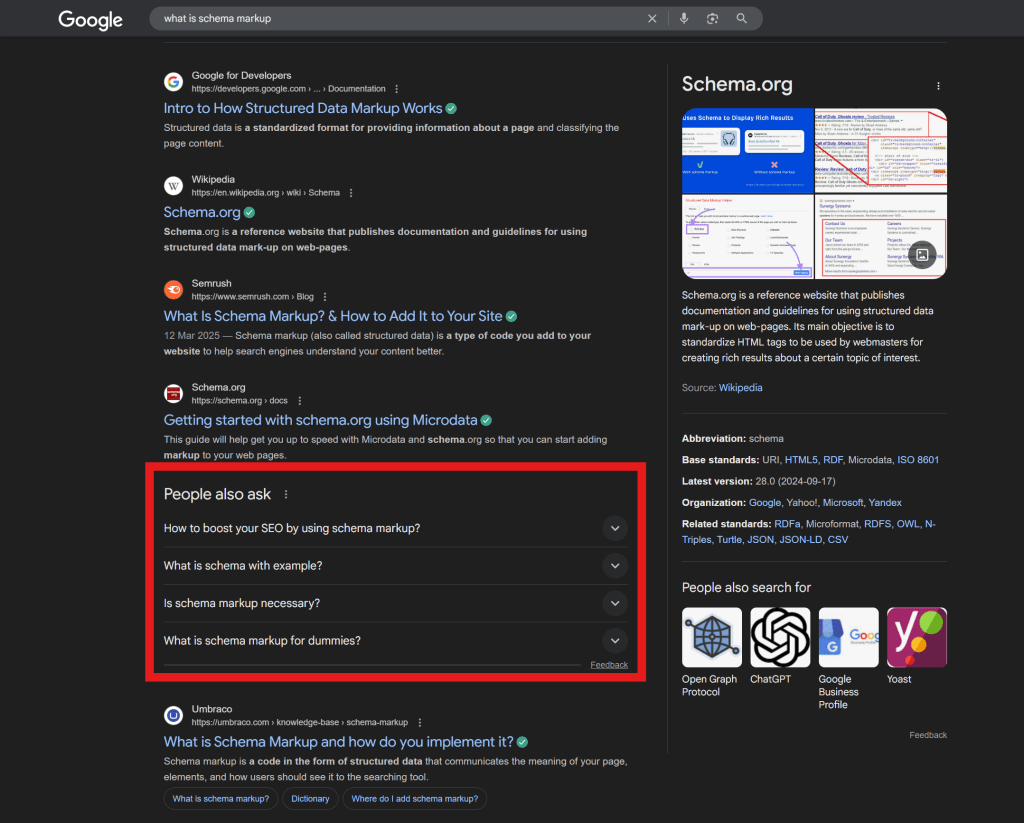
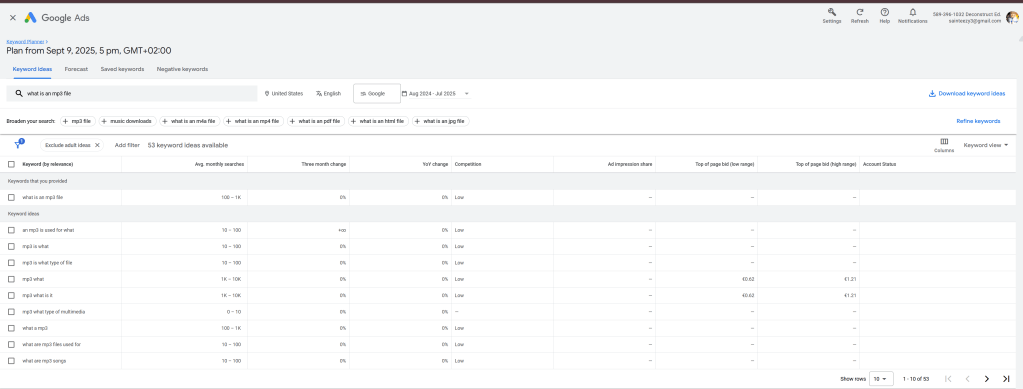
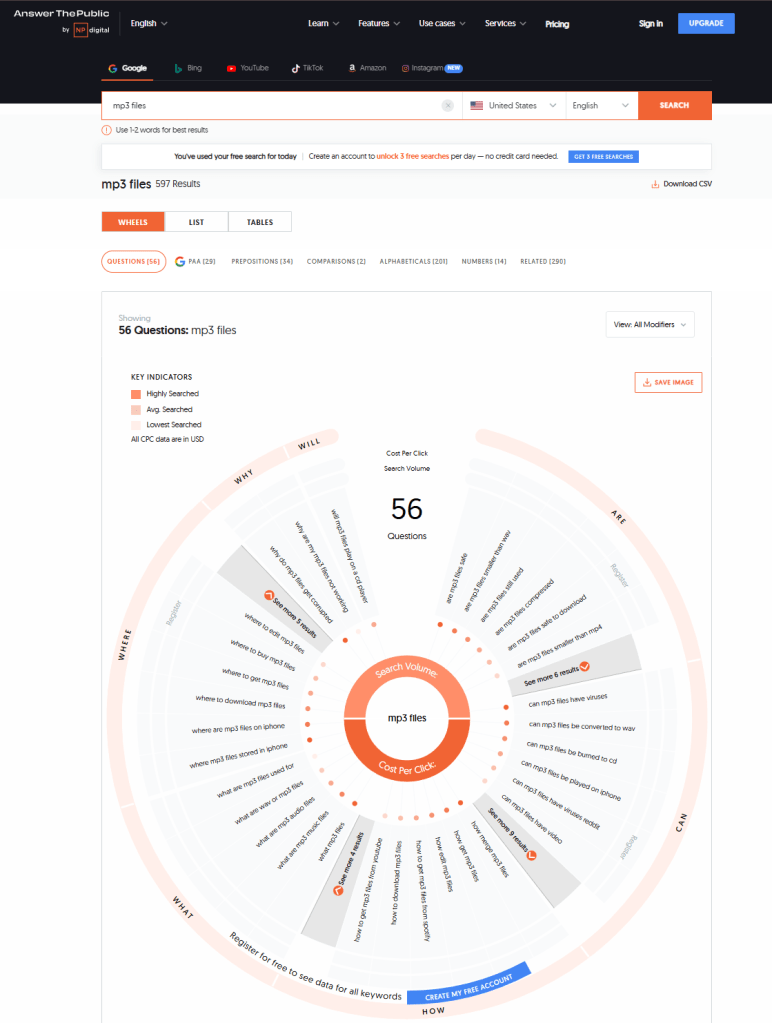
Once you’ve got your questions sorted out, it’s time to lay out the content for both people and AI.
Think of it like a FAQ style, where you set up a question as a subheading (H2 or H3) and then dive right into a short answer right after.
Keep it simple and to the point, around 40-60 words is perfect, so it’s easy to skim through.
Scannable information like bullet points, numbered lists, and tables are super handy for boosting readability and making it easier for search engines and AI to grab the bits that matters most.
Technical Optimization
While content is what people see with AEO, a solid technical foundation is what keeps the AI systems coming back.
Structured data, or schema markup, is crucial for nailing your AEO strategy. When you add this code to your website’s HTML, it helps search engines and AI systems get a grip on your content, boosting your chances of popping up in quick-response formats.
Some schema types like FAQ, How-to, and Q&A work wonders for AEO because they’re made to present information in a way that’s easy for answer engines to digest.
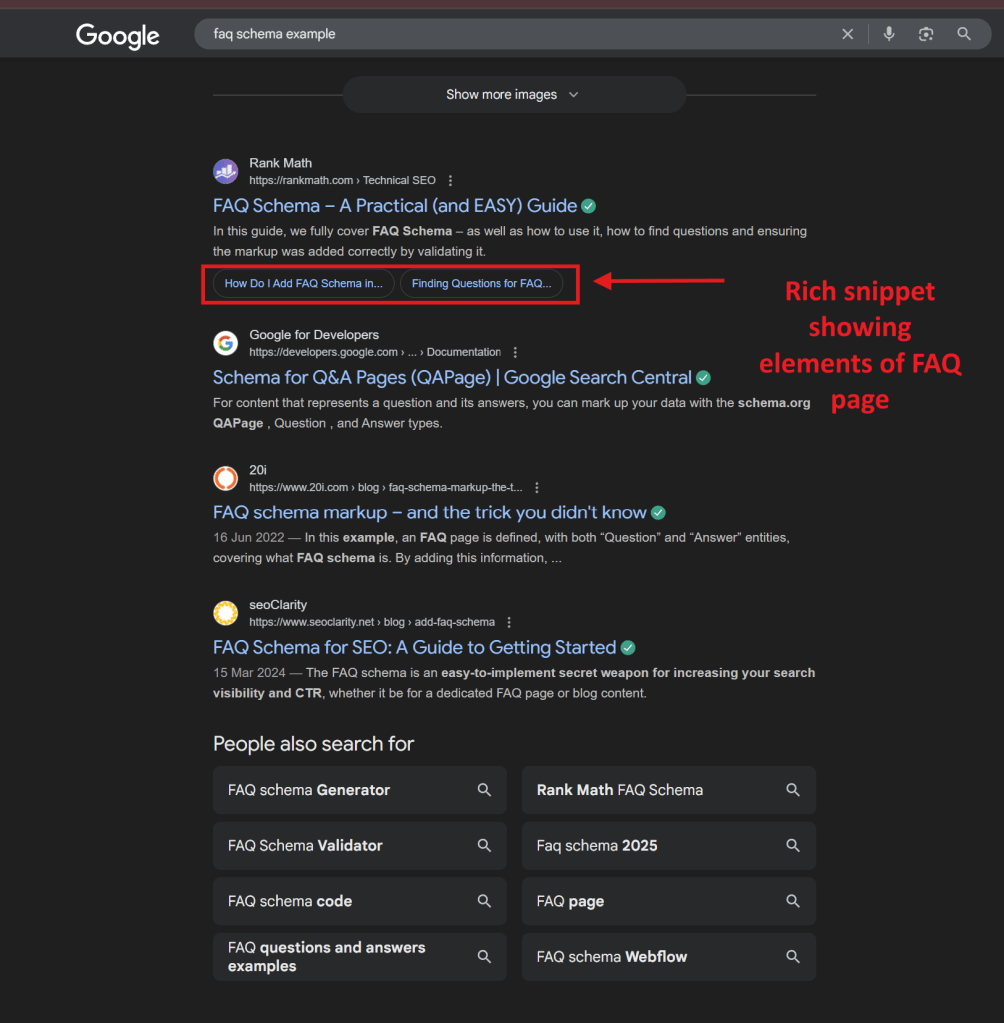
But structured data isn’t the only thing; you also need to make sure your entire website is technically sound.
Think mobile-first design since a lot of conversational searches happen on smartphones and make sure your page loads fast—this is key for ranking well in both traditional and AI-powered searches.
Key Answer Spaces
A successful AEO strategy targets key search environments where direct answers are provided. For example:
Featured Snippets
Featured snippets are those neat little boxes that pop up at the very top of search results, often called “position zero” — everyone wants to grab that spot!
They’re the go-to for quick answers, and guess what? Around 70% of them are just plain ol’ paragraphs, with lists making up 19%, tables at 6.3%, and videos trailing behind at 4.6%.
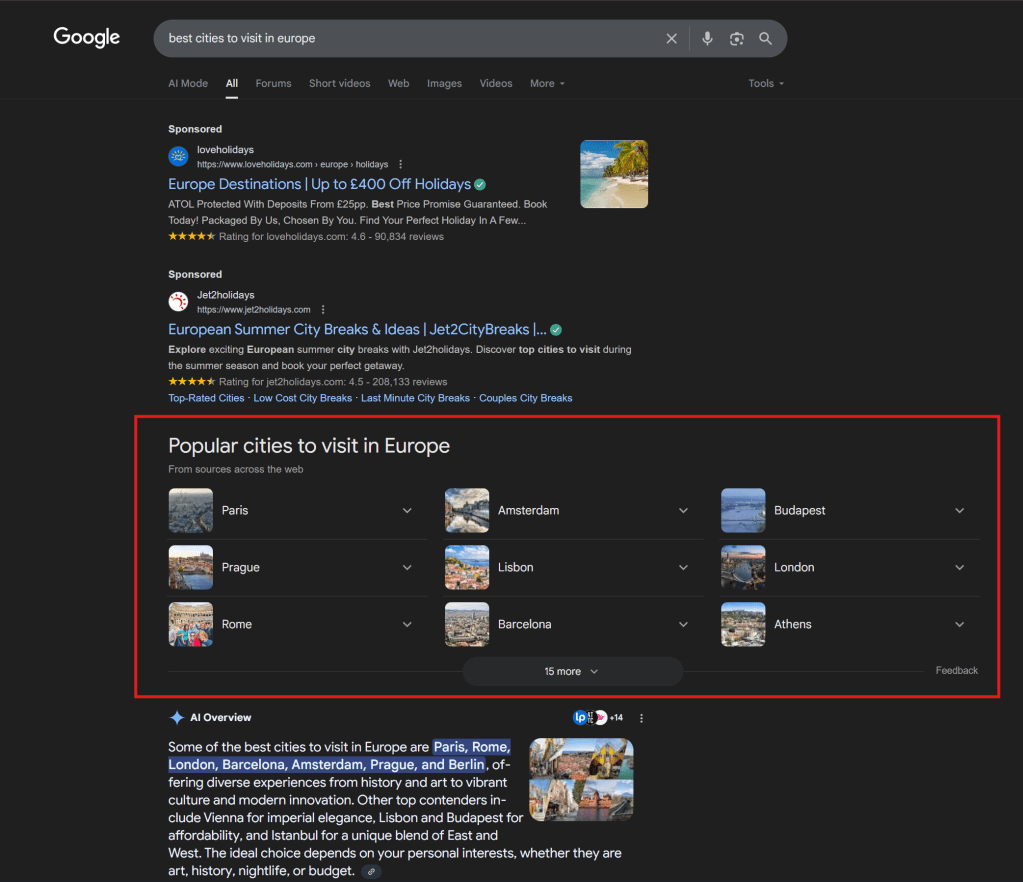
But securing one of those spots isn’t as easy as it sounds! To snag one of these featured snippets, your page has to first bust into the top 10 organic results for the search term you’re after.
Luckily, I’ve prepared a cheeky cheat sheet to help you understand what you need to do.
Table 3: Featured Snippet Optimization Cheat Sheet
| Snippet Type | Optimization Strategy | Key Data Points |
|---|---|---|
| Paragraph | Answer a specific question clearly and concisely. Place the answer within the first 100-200 words of the content. | Answer length should be approximately 40-60 words. |
| List | Use ordered or unordered lists to detail a process or list of items. Structure content with clear H2/H3 question subheadings. | Lists are ideal for “how-to” or step-by-step queries. |
| Table | Organize comparative data, prices, or lists with multiple variables into a table format. | Ideal for queries like “iOs vs. Android” or “product comparison” |
| Video | Ensure video content is structured with clear question-answer segments. Use descriptive titles, tags, and captions. | Video snippets are becoming more common and can be powerful for visual content. |
People Also Ask (PAA)
PAA boxes are basically a bunch of related questions that show up on the search results page.
Even though they only get about a 6% click-through rate, they’re a great way to boost your visibility and show that you know your stuff.
To snag a spot in a PAA box, make sure your content uses a question-and-answer format with H2 or H3 subheadings that are framed as questions.
Lastly, keep your answers short and sweet, around 2-3 sentences tops!
What’s the Future of Search Going to Be Like?
While AEO is all about optimizing for those traditional answer boxes, the next big thing is Generative Engine Optimization (GEO).
GEO is how you tweak your content for generative AI platforms like Google’s SGE and ChatGPT, which are all about coming up with responses instead of just pulling them from somewhere.
Unlike AEO, which is more of a “narrower strategy” focused on rich snippets and knowledge graphs, GEO takes a broader approach that looks at “narrative control” and “sentiment” in all kinds of AI optimization efforts.
GEO creates deep, authoritative content hubs packed with entity signals and citations, making them way more likely to be used and quoted in those AI-generated answers.
The ongoing back-and-forth about AEO, SEO, GEO, and SGE really shows how fast things are changing in the digital world.
Instead of picking just one, the best move is to mix them all together into one cohesive strategy.
Think of it as “search-everywhere optimization.”
Each one brings something unique to the table:
SEO builds authority and gets your brand out there, AEO grabs those specific question-driven searches and helps build trust, while GEO makes sure your brand’s story is spot-on in AI-created summaries and chats.
By going for a blended, multi-faceted approach, your brand can stay ahead of the game and keep its content relevant as search continues to evolve.
Discover more from Deconstruct Ed.
Subscribe to get the latest posts sent to your email.

